Roots.
How Maria Montessori's original observations shaped our approach to young children.
Roots
“Scientific observation has established that education is not what the teacher gives; education is a natural process spontaneously carried out by the human individual, and is acquired not by listening to words but by experiences upon the environment. The task of the teacher becomes that of preparing a series of motives of cultural activity, spread over a specially prepared environment, and then refraining from obtrusive interference. Human teachers can only help the great work that is being done, as servants help the master. Doing so, they will be witnesses to the unfolding of the human soul and to the rising of a New Man who will not be a victim of events, but will have the clarity of vision to direct and shape the future of human society." - M. Montessori
In 1907, Montessori opened the Casa dei Bambini in Rome. Given carefully prepared materials and freedom to choose their work, children there developed coordination, concentration, persistence, and a sense of order. That work built confidence and independence.
What this looks like in practice
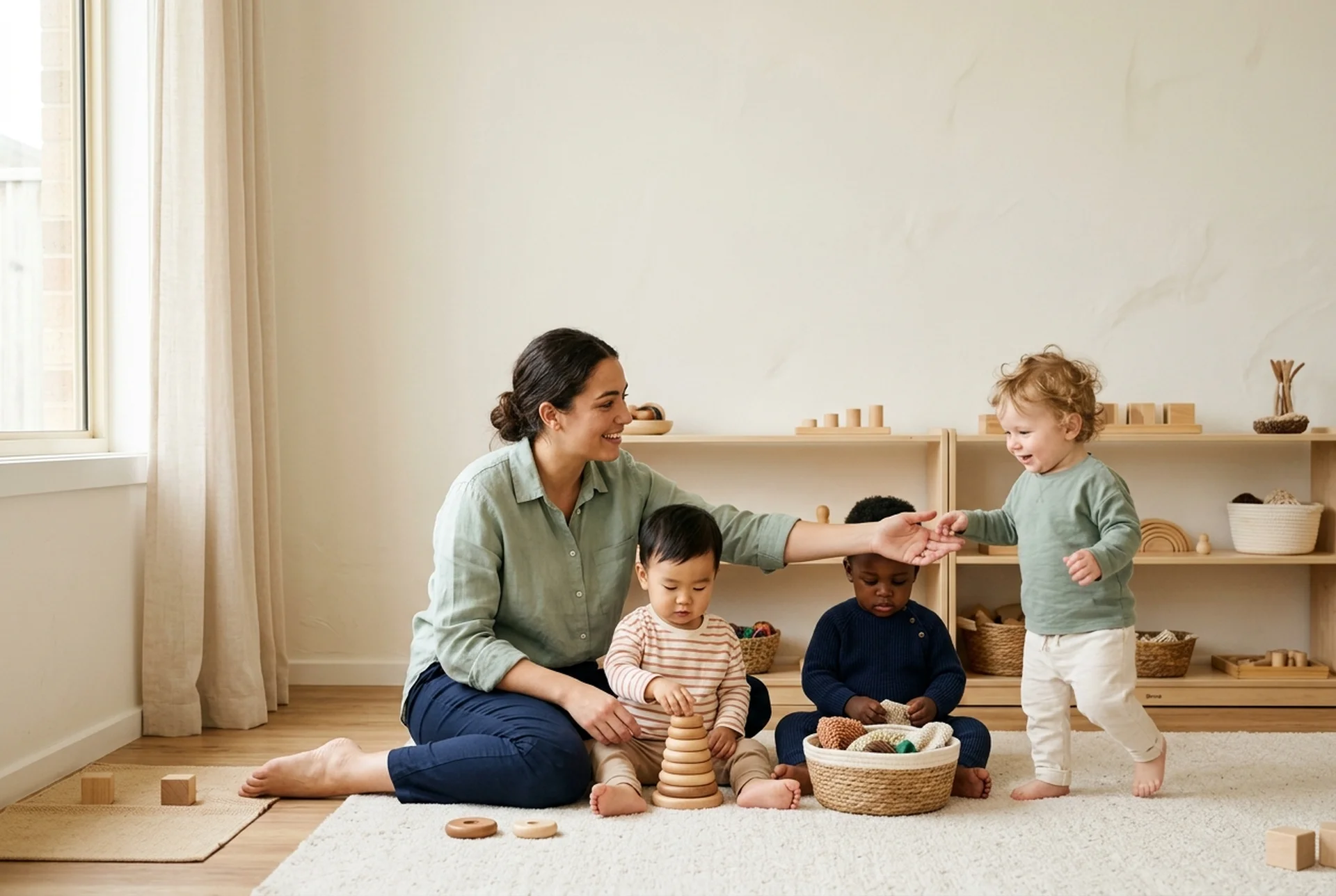
In a Montessori classroom, children choose what to work with from materials set out on open shelves. The teacher prepares the room and then steps back, offering help toward the next step when it is needed. Because the work is self-motivated, children learn eagerly and thoroughly.
That early confidence stays with them. A child who has practiced concentrating on a chosen task can persist when something is hard. A child who has worked alongside others learns to help and be helped. These habits build a foundation for satisfaction in life.